
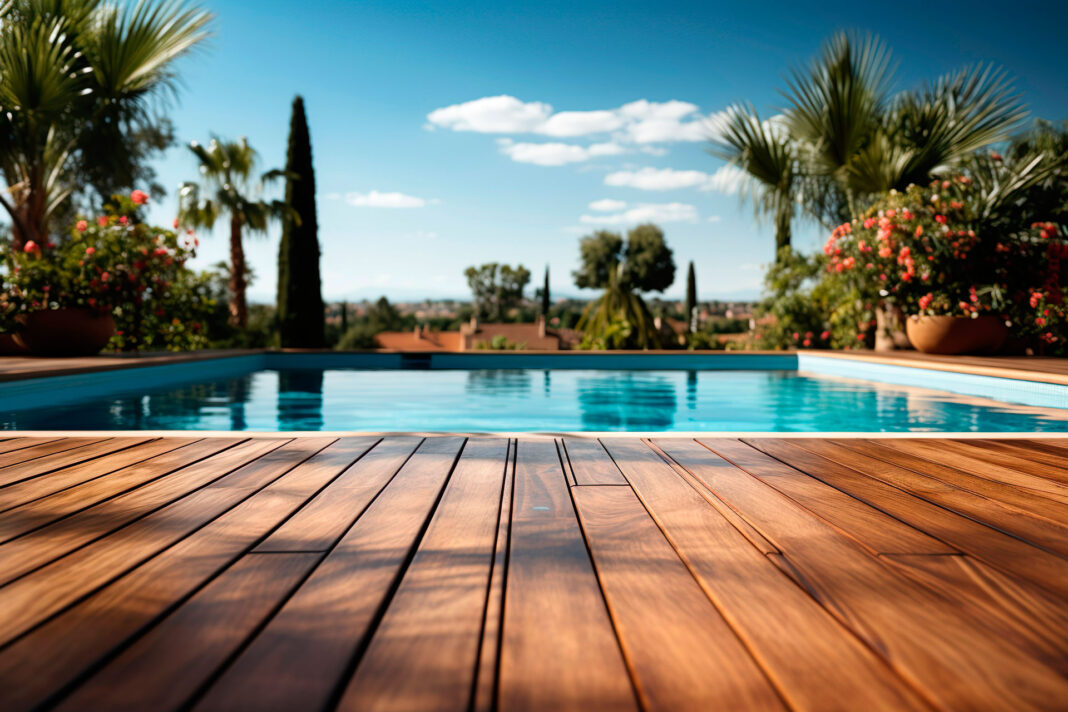
A pool deck does more than fill the space around your pool — it shapes how the whole backyard actually gets used, from lounging and entertaining to simply walking barefoot from the house to the water without burning your feet. But a deck isn’t something to plan as an afterthought once the pool is finished. Getting a few key decisions right up front makes the difference between a deck that looks great for years and one that starts showing problems within a season or two. Here are five things worth understanding before you start.
1. Material Choice Affects More Than Just Looks
Pool deck materials each come with real trade-offs beyond appearance. Stamped concrete is popular for its versatility and relatively lower cost, offering a wide range of colors and textures. Natural stone, like travertine or flagstone, brings a premium look and stays notably cooler underfoot in direct sun, which matters more than people expect on a hot summer afternoon. Pavers offer flexibility for repairs, since individual pieces can be replaced without redoing the whole surface, but they typically cost more upfront than poured concrete. The right choice depends on your climate, budget, and how much low-maintenance durability matters to you.
2. Slip Resistance Isn’t Optional Around Water
A pool deck gets wet constantly, and a smooth, polished surface that looks great in photos can become dangerously slippery in real use. Textured finishes, exposed aggregate, or specifically rated pool-deck materials are designed to provide traction even when wet. This is one area where cutting corners for a slightly cheaper finish can create a genuine safety hazard, especially for kids running around a pool area. A reputable contractor will always factor slip resistance into material recommendations rather than prioritizing appearance alone.
3. Proper Drainage Prevents Long-Term Problems
One of the most overlooked aspects of deck planning is drainage. A pool deck needs a slight slope — typically away from the pool and toward a drainage point — so water doesn’t pool on the surface or seep toward the home’s foundation. Poor drainage planning can lead to standing water, premature cracking from freeze-thaw cycles in colder months, and even erosion under the deck surface over time. This is a detail that’s easy to get wrong without experience, which is part of why professional planning matters here more than it might seem.
4. Deck Size and Layout Should Match How You’ll Actually Use the Space
It’s tempting to think bigger is always better, but the right deck size depends on how the space will actually be used. A deck meant mainly for lounge chairs and sunbathing has different space needs than one designed for a dining area, an outdoor kitchen, or space for larger gatherings. Thinking through furniture placement, walkways, and shaded areas before finalizing the layout helps avoid a deck that either feels cramped or has awkward, unused space once it’s built.
5. Local Climate Should Guide Material and Construction Decisions
Culpeper, VA experiences real seasonal temperature swings, including freezing winter conditions, which affects how a pool deck should be built and what materials hold up best. Concrete decks need proper reinforcement and control joints to handle freeze-thaw expansion without cracking. Natural stone and pavers generally handle temperature swings well but still need a properly prepared base to prevent shifting over time. A contractor familiar with the local climate will build in these considerations from the start rather than applying a generic approach that might work better in a warmer, more stable climate.
Comparison of Common Pool Deck Materials
| Material | Cost Level | Heat Retention | Maintenance | Best For |
|---|---|---|---|---|
| Stamped concrete | $$ | Moderate-high | Low | Budget-conscious, versatile design |
| Natural stone (travertine, flagstone) | $$$ | Low (stays cool) | Moderate | Premium look, hot climates |
| Pavers | $$$ | Moderate | Moderate (easy repairs) | Long-term flexibility, repairs |
| Poured concrete (basic) | $ | High | Low | Simple, budget-first projects |
| Wood/composite decking | -$ | Low-moderate | Moderate-high | Raised or multi-level designs |
These are general comparisons — actual performance depends on installation quality and your specific site conditions.
Why Professional Installation Matters
A pool deck isn’t just a surface poured or laid on top of the ground — it requires proper base preparation, drainage planning, and material-specific installation techniques to hold up over years of sun, water, and temperature changes. Improper base compaction is one of the most common causes of cracking and shifting down the line, and it’s not something that’s easy to fix after the fact without tearing up the surface. Working with an experienced pool and outdoor construction team ensures these foundational details are handled correctly the first time.
Getting Started With Your Pool Deck Project
Before committing to a material or layout, it’s worth having a professional walk the space, discuss how you plan to use the area, and account for your local climate and drainage needs. A good contractor will explain trade-offs clearly rather than just pushing the most expensive option, and will provide a realistic timeline based on your specific project scope.
Frequently Asked Questions
1. How long does it take to build a new pool deck?
Most residential pool deck projects take one to two weeks, depending on size, material choice, and weather conditions during construction.
2. Can a pool deck be added to an existing pool?
Yes, decks are commonly added or expanded around existing pools, though the process requires careful planning around the current pool structure and surrounding landscaping.
3. What’s the most durable pool deck material?
Natural stone and quality pavers tend to be among the most durable options, especially in climates with seasonal freeze-thaw cycles, though all materials perform best with proper installation.
4. Do pool decks need regular maintenance?
Yes, though the amount varies by material. Concrete may need periodic sealing, while pavers may need occasional joint sand replenishment — a contractor can outline what your specific material requires.
5. How much does a new pool deck typically cost?
Cost depends heavily on material choice, size, and site conditions. A contractor can provide an accurate estimate after assessing your specific pool area and design goals.
Conclusion
A well-built pool deck comes down to the right material for your climate, proper slip resistance, correct drainage planning, and a layout that actually fits how you’ll use the space. Getting these details right from the start means a deck that looks great and holds up for years rather than one that needs early repairs. If you’re planning a new pool deck, working with an experienced team makes all the difference in avoiding costly mistakes. Paradium Pools — contact us today to start planning your pool deck project in Culpeper, VA and the surrounding areas.